Waking up with a red, itchy rash is frustrating, especially when you realize your “freshly cleaned” sheets might be the culprit. If you have identified that your soap is the problem, the first question on your mind is likely: how long does an allergic reaction to laundry detergent last?
The short answer is that a typical reaction, known as contact dermatitis, can last anywhere from 2 to 4 weeks. However, there is a catch. The clock on that healing timeline only starts once your skin is no longer touching the irritant. If those allergens are still trapped in your clothes, towels, or bedding, the rash may persist indefinitely.
At Long Island Laundry Company, we specialize in “Your Laundry, Your Way,” helping neighbors across Nassau and Suffolk County eliminate the chemical triggers that cause these uncomfortable skin reactions.
Why Does a Laundry Detergent Allergy Last So Long?
Many people assume that once they stop using a specific brand of soap, the rash should vanish overnight. Unfortunately, laundry detergent is designed to bond to fabric fibers. Even after a wash cycle, microscopic residues of fragrances, dyes, and surfactants remain trapped in the weave of your clothing.
When you have sensitive skin, your body views these residues as foreign invaders. This triggers a “histamine response,” causing inflammation and itching. Because the skin barrier takes time to repair itself and because you likely have a closet full of clothes already washed in the old detergent, the reaction can linger for nearly a month.
If you are struggling to get the smell and residue out of your favorite fabrics, you may want to learn how to get laundry detergent out of carpet and other textiles to ensure your environment is truly clean.
Stock Image Suggestion: A close-up of a person looking frustrated while looking at a red, itchy patch on their arm or neck.
Is It Irritant or Allergic Contact Dermatitis?
Not all skin reactions are created equal. Understanding which one you have can help you manage the timeline.
- Irritant Contact Dermatitis: This happens when a harsh chemical actually damages the outer layer of your skin. It usually appears almost immediately after contact and feels more like a “burn.”
- Allergic Contact Dermatitis: This is a delayed reaction. You might not see the rash until 24 to 72 hours after wearing a specific shirt. It often spreads beyond the initial touchpoint and causes intense, persistent itching.
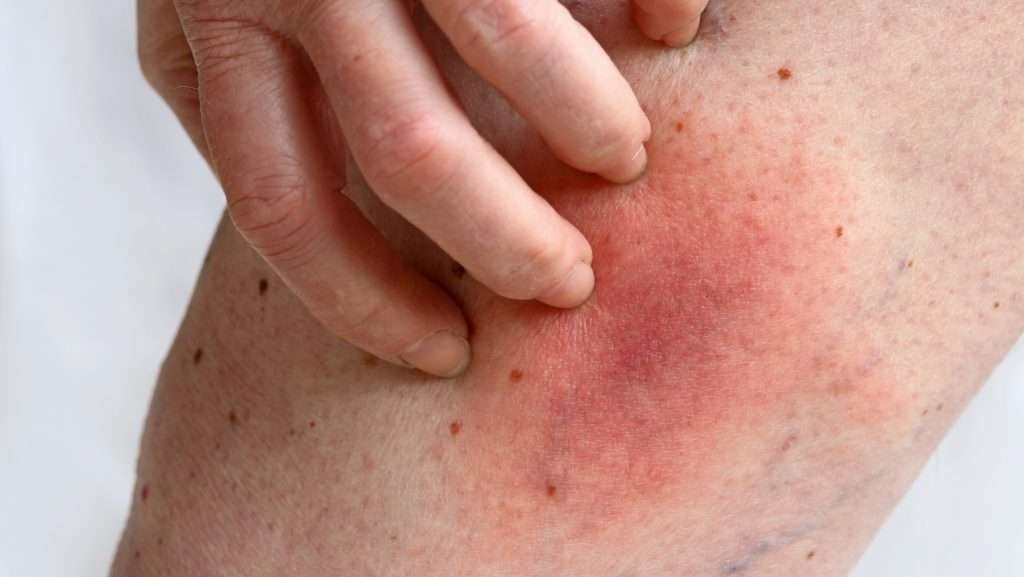
According to search data, many people want to know what a detergent allergy looks like. It typically manifests as raised red bumps, scaly patches, or even hives. In severe cases, the skin can become “leathery” or cracked. Using a professional wash and fold laundry service can help ensure these irritants are thoroughly rinsed away.
Common Symptoms of Laundry Detergent Allergy
Symptoms typically show up in areas where clothing has direct, prolonged contact with skin. Think underarms, inner thighs, waistband zones, neck, or behind the knees. They can appear anywhere from a few hours to several days after putting on freshly washed items.
Common signs people describe (and search for with terms like “laundry detergent rash pictures” or “detergent allergy bumps”):
- Red, inflamed patches or widespread rash
- Itching that ranges from mild to intense and persistent
- Small raised bumps, hives, or welts
- Dry, cracked, scaly, or flaky skin
- Burning, stinging, or tender feeling on contact
- Localized swelling or puffiness in irritated zones
These often intensify with sweat, heat, or friction from movement. In households with children or seniors, symptoms may appear more noticeably on covered body areas. The appearance is generally red and irritated rather than blistered or weeping (unless scratching worsens it). Focusing on residue prevention stops this cycle before it starts. For a deeper look at skin contact issues from detergents, see our related post on laundry detergent on skin.
(Stock photo suggestion: Washing machine interior during a rinse cycle with water flowing – alt text: “Extra rinse cycle to flush out detergent residue and reduce skin irritation risk”)
What are the Hidden Triggers in Your Detergent?
To stop the reaction, you have to know what you are fighting. Most commercial detergents are cocktails of complex chemicals. The most common offenders include:
- Synthetic Fragrances: These are the primary cause of laundry-related allergies. Even “unscented” products sometimes contain masking fragrances.
- Optical Brighteners: These chemicals do not actually clean your clothes. They just coat the fibers to reflect light and make whites look “whiter.”
- Sodium Lauryl Sulfate (SLS): A common surfactant that creates suds but can be incredibly drying and irritating to the skin.
- Preservatives: Chemicals like methylisothiazolinone are often used to extend shelf life but are known skin sensitizers.
If you are worried about chemicals, you might consider homemade laundry sanitizer as a safer alternative for your household.
How Can You Break the Cycle and Speed Up Healing?
If you want to ensure your rash clears up within that 2-week window, you must perform a “laundry detox.”
Have You Tried a “Detox” Wash?
You need to strip the old detergent out of your clothes. Running a wash cycle with just hot water and a cup of distilled white vinegar can help break down the chemical buildup. This is especially important for items that stay in close contact with your skin for long periods, such as bedsheets and underwear.
Why Is the Double-Rinse Strategy Important?
Modern high-efficiency washing machines use very little water. Often, they do not rinse thoroughly enough to remove all the soap. At Long Island Laundry Company, we recommend and provide a double-rinse cycle for our customers with sensitive skin to ensure every trace of irritant is gone. Our laundry pickup and delivery service makes this entire process effortless for you.
Does Temperature and Sanitization Matter?
Higher temperatures can help open up fabric fibers to release trapped chemicals. However, you must balance this with the care instructions for your garments to avoid damage.
Stock Image Suggestion: A high-end washing machine showing a “Double Rinse” or “Extra Rinse” setting being selected.
What Is the Step-by-Step Guide to a Laundry-Safe Home?
If you are currently dealing with a rash, follow these steps to ensure a quick recovery:
- Identify the Culprit: If you recently changed soaps, switch back to a known safe brand or a hypoallergenic option.
- Clean Your Machine: Run an empty hot-water cycle with a dedicated washing machine cleaner to remove residue from the drum.
- The Great Re-Wash: Start with your bedding and towels. These have the most contact with your skin.
- Schedule a Professional Pickup: Let us handle the heavy lifting. We can process your entire backlog of clothes using specialized, skin-safe detergents through our [suspicious link removed] service.
Why Is Long Island Laundry Company Your Best Choice for Sensitive Skin?
Managing a laundry allergy on your own is a massive undertaking. You have to re-wash every piece of cloth in your home, from your bedsheets to your winter coats. That is where we come in. At Long Island Laundry Company, we provide a professional, personalized solution that takes the stress and the chemicals out of your life.
As a family-owned and operated business with over 19 years of experience, we understand the importance of safety for your family because we treat your clothes like our own. We offer a “Your Laundry, Your Way” guarantee, giving you total control over the process to ensure your skin stays healthy and irritation-free.
- Premium Detergent Choices: We carry name-brand, skin-friendly options like Tide Free & Gentle and All Free & Clear to match your specific needs.
- No Cross-Contamination: Unlike many other providers, we never mix your clothes with another customer’s order. Your items are always processed separately in sanitized machines.
- Eco-Friendly & Fragrance-Free: We offer plant-based detergents for those who want to avoid synthetic chemicals and masking fragrances entirely.
- Transparent Pricing: At $1.95/lb with no hidden service fees or surcharges, you get premium care without the premium headache.
- Guaranteed Satisfaction: We know how to handle delicate fabrics and sensitive skin requirements. If your order is not processed exactly how you wanted it, we will re-wash it for free.
Whether you need a laundry service in Long Island or specialized hypoallergenic care in Glen Cove, our team is ready to provide a fresh, allergen-free start for your wardrobe.
Stock Image Suggestion: A stack of perfectly folded, clean white towels representing a fresh, allergen-free start.
Frequently Asked Questions
Can I suddenly become allergic to a laundry detergent I’ve used for years?
Yes, it is possible. Allergies can develop at any time due to sensitization. This happens when your immune system slowly decides that a certain chemical is a threat after repeated exposure. You can learn more about how ingredients like Era laundry detergent affect users over time in our detailed guides.
How do I get laundry detergent out of my clothes to stop the itching?
To remove stubborn residue, wash your clothes in the hottest water safe for the fabric using a cup of white vinegar instead of soap. Follow this with an extra rinse cycle. If the smell of the old detergent still lingers, the allergens are likely still there.
What does a laundry detergent rash look like compared to other rashes?
A detergent rash usually appears where clothing is tightest against the skin. This includes the waistline, armpits, or the backs of the knees. It often presents as red, scaly patches or small, raised red bumps that are intensely itchy.
Is Tide Free & Gentle actually safe for sensitive skin?
Many experts suggest that Tide Free & Gentle is a safer alternative because it is free of dyes and perfumes. However, if your skin is extremely sensitive, a professional service can ensure a more thorough rinse than most home machines. You can find more information about skin safety and eczema on the National Institutes of Health website.
Should I see a doctor for a laundry detergent rash?
If your rash is accompanied by hives or difficulty breathing, you should seek medical attention immediately. Most experts recommend consulting a professional if the irritation does not improve after one week. Detailed information on managing contact dermatitis is available on Wikipedia.
Ready to become laundry-free and itch-free?
Stop wasting your time and risking your skin. Let Long Island Laundry Company handle the dirty work exactly how you want it.